Many businesses in 2026 face a persistent issue: organic traffic remains flat or declines even after months of consistent SEO work. Site owners invest time and budget into content creation, link building, and technical fixes, yet Google Search Console shows limited upward movement in sessions or impressions. This happens because Google has shifted its ranking systems toward user-first signals. The search engine now evaluates whether content genuinely helps people solve problems, rather than whether it matches keywords closely or follows traditional optimization patterns.
AI-influenced features, such as AI Overviews (expanded significantly since 2025), appear at the top of results for many queries. These summaries pull key information directly from sources and reduce the need for users to click through to websites. Studies from 2025 show that when AI Overviews trigger, organic click-through rates can drop by around 60% on affected queries (from roughly 1.76% to 0.61% in some analyses). Traditional blue-link clicks decrease as users get answers without leaving Google. This change compounds the problem for sites that rely heavily on informational or mid-funnel traffic.
Google also applies stricter quality checks. Content that appears thin, repetitive, or created primarily for search rankings receives lower visibility. Core updates throughout 2025 (March, June, August spam-focused, and December) and into early 2026 have reinforced this direction. Sites with strong alignment to user needs often recover or gain, while others see sustained drops.
Current Google Policies Overview
Google’s approach in 2026 centers on broad core updates rather than frequent minor tweaks. The December 2025 core update, which rolled out from December 11 to December 29 (18 days), continued the pattern seen earlier in the year. These updates adjust how the algorithm assesses relevance, quality, and usefulness across billions of pages. Google states that core updates improve the handling of content to better match what people seek.
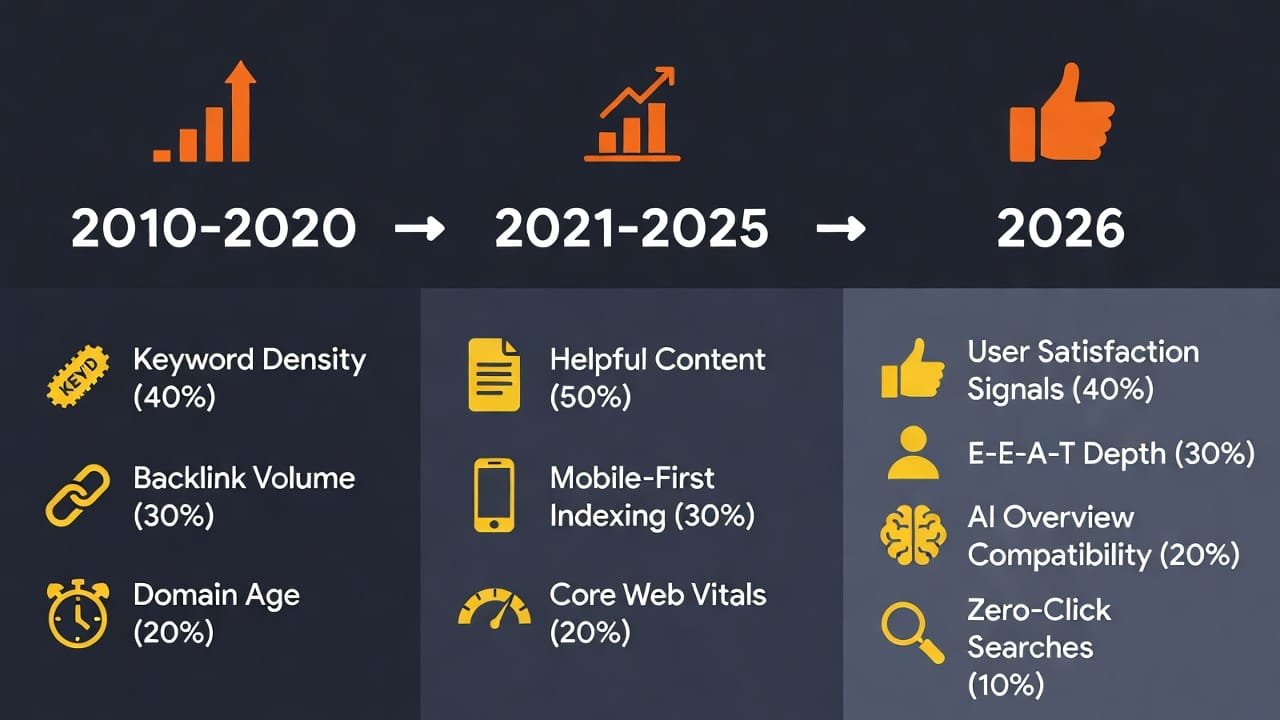
A key emphasis remains on people-first content. Google advises creators to focus on producing material that benefits users directly, rather than optimizing first for search engines. The helpful content system, integrated into core ranking processes, identifies and prioritizes original, insightful work written for humans. Content that satisfies search intent with depth and accuracy ranks higher over time.
E-E-A-T (Experience, Expertise, Authoritativeness, Trustworthiness) functions as a guiding framework, especially for topics that affect health, finances, safety, or major life decisions (YMYL categories), but it influences rankings more broadly. Google looks for clear signs of first-hand experience, demonstrated knowledge from credible sources, recognized authority (through citations, reviews, or mentions), and overall reliability (accurate information, transparency about authors, secure site practices). In 2026, signals tied to E-E-A-T receive even stronger weight following refinements in late 2025 and January 2026 updates.
No tricks or shortcuts deliver sustainable results. Tactics like keyword stuffing, scaled AI content without meaningful edits, paid link networks, or cloaking violate Google’s spam policies and lead to manual actions or algorithmic demotion. Recovery from penalties takes months and requires full removal of offending elements. Alignment with Google’s published guidance—available on Search Central—remains the only reliable path.
Realistic Expectations for Traffic Growth
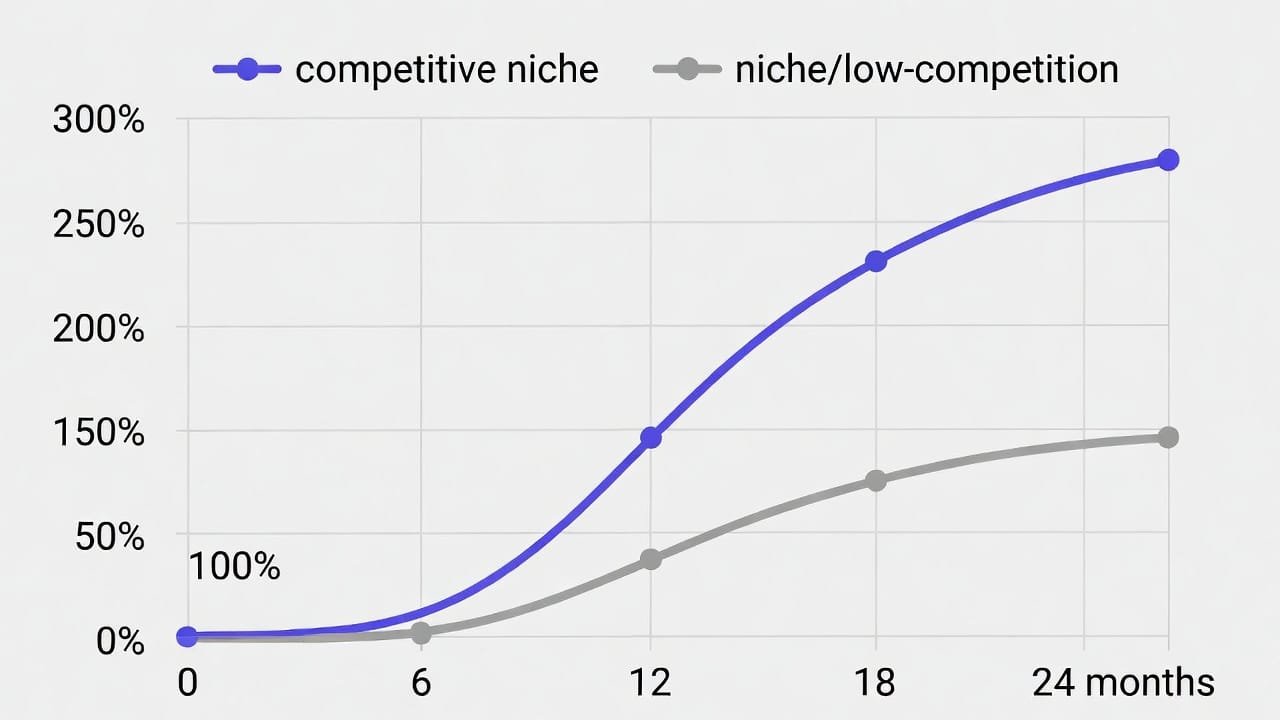
A 300% increase in organic traffic is achievable in specific cases, but it occurs infrequently. Such growth usually appears on sites that start from a low baseline (for example, under 5,000 monthly sessions), operate in niches with moderate competition, and execute improvements consistently over an extended period.
In practice, most businesses see early signals within the first 1–3 months after addressing technical issues and refreshing key pages. These signals include higher impressions for existing pages, slight position gains on low-competition terms, and gradual session increases. Meaningful traffic growth—often 30–100%—typically requires 6–12 months of steady effort, assuming solid execution and no major algorithm setbacks.
Larger jumps, such as 200–300%, generally take 12–24 months. They depend on factors like:
- Building topical depth across clusters of related queries.
- Earning natural authority signals (backlinks from relevant domains, positive brand mentions).
- Adapting content to appear in AI Overviews or featured snippets.
- Maintaining consistency while competitors face volatility.
Case studies from 2025–2026 show varied outcomes. Some B2B sites report 100–175% revenue-linked traffic growth over 12–18 months after site redesigns and content overhauls. Others in competitive consumer niches achieve only modest gains despite similar work. Volatility remains common; even well-optimized sites can experience temporary 20–50% drops during core update rollouts before stabilizing or recovering.
The timeline extends further for new domains or highly competitive topics (e.g., insurance, legal services, finance), where trust signals take years to accumulate. Established sites with prior authority can move faster when they pivot to stronger user-focused strategies.
Here is a suggested visual to illustrate the shift in Google’s ranking approach:
Practical Strategies Aligned with 2026 Google Policies
The strategies below follow Google’s current direction: prioritize user value, demonstrate E-E-A-T, support AI-driven features like AI Overviews, and maintain solid technical foundations. They avoid shortcuts and focus on actions that produce lasting improvements when executed consistently.
Technical SEO Basics That Remain Essential
Technical issues block progress even with strong content. Google still requires fast-loading pages, mobile-friendly design, and easy crawlability.
- Site speed: Aim for Core Web Vitals scores in the “good” range (LCP under 2.5 seconds, FID under 100 ms, CLS under 0.1). Pages that fail these thresholds see lower rankings, especially on mobile. Use PageSpeed Insights to identify fixes like image compression, code minification, and efficient caching.
- Mobile usability: Over 60% of searches occur on mobile devices. Responsive design is non-negotiable. Test with Google’s Mobile-Friendly Test tool; fix issues like text too small to read or clickable elements too close together.
- Crawlability: Ensure Googlebot can access all important pages. Submit an updated XML sitemap via Google Search Console, fix crawl errors, and use robots.txt carefully to avoid blocking key resources. Implement proper canonical tags to handle duplicate content.
- Structured data: Schema markup helps Google (and AI systems) understand content better. Use JSON-LD for FAQ, HowTo, Product, Review, Article, and LocalBusiness schemas where relevant. Pages with accurate structured data appear more often in rich results and AI Overviews. Validate with Google’s Rich Results Test.
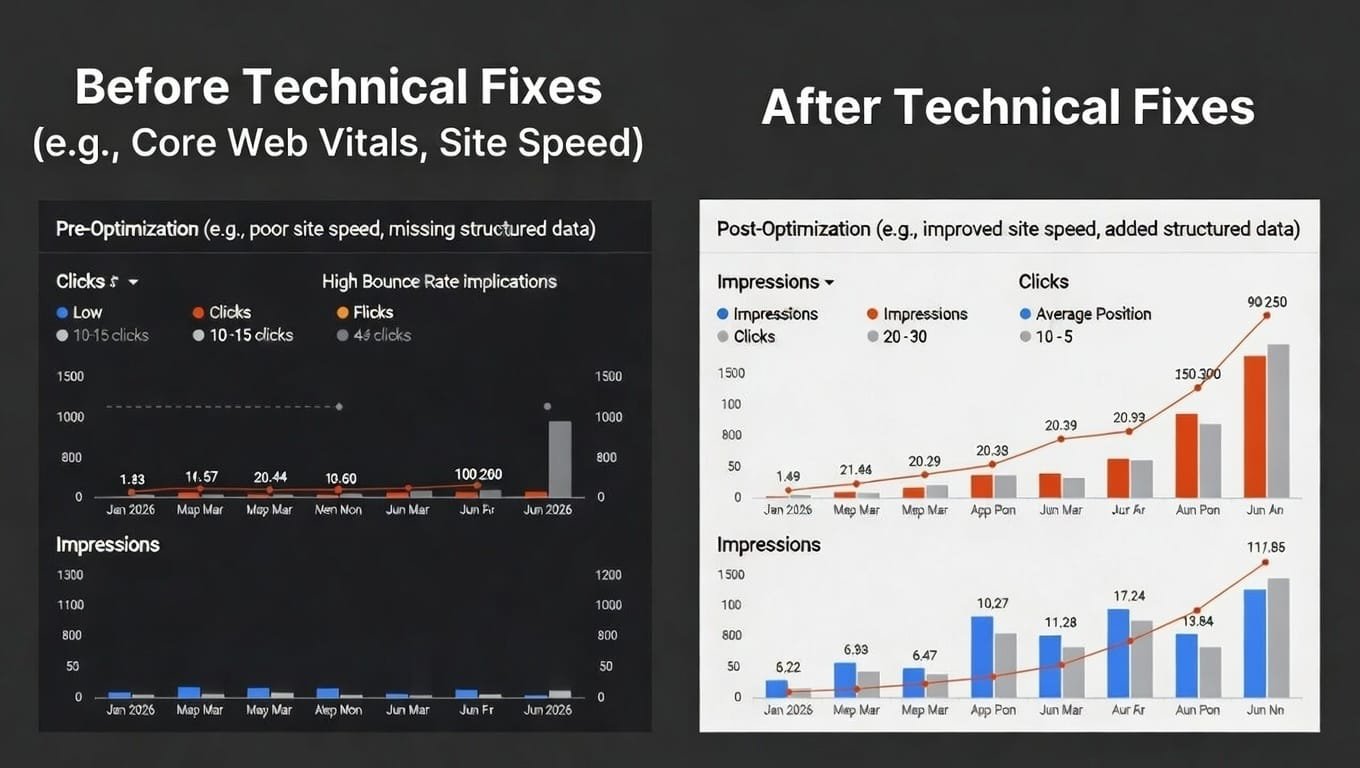
Fixing these basics often yields the fastest initial gains—typically within 4–12 weeks—as they improve indexing and user experience signals.
Here is a suggested visual for tracking progress:
Content Strategy: Depth Over Volume
Produce content that fully addresses user intent rather than targeting many shallow keywords. Google favors in-depth pages that cover topics comprehensively.
Start by refreshing existing pages. Audit top-performing URLs in Search Console (filter by impressions > clicks or declining positions). Update them with fresh data, additional sections, clearer answers, and better examples. Refreshed pages often regain or improve rankings faster than new ones—frequently within 1–4 months.
For new content, build topical clusters: Select a core pillar topic (e.g., “solar panel installation costs in UAE”), then create 8–15 supporting pages around sub-queries (e.g., “government subsidies for solar in Dubai,” “maintenance costs over 10 years”). Link them internally to signal depth.
Write original material backed by real experience or research. Include specific numbers, case examples, step-by-step processes, and comparisons. Avoid generic overviews or AI-generated text without substantial human editing—Google detects and demotes low-effort scaled content.
On-Page Optimization Without Keyword Stuffing
Optimize for clarity and user flow.
- Title tags: Keep under 60 characters, include main intent early (e.g., “Solar Panel Costs in UAE 2026: Full Breakdown and Savings”). Make them descriptive, not clickbait.
- Headings: Use H1 for the main topic, H2/H3 for logical sections. Structure answers so users scan easily—Google pulls from well-organized content for AI Overviews.
- Internal linking: Link based on user journeys (e.g., from a cost overview to installation steps, then to financing options). Use descriptive anchor text. This distributes authority and helps users navigate.
Avoid forcing keywords into text unnaturally. Write for people; search engines follow.
Building Authority: Earn Signals Through Value
Authority builds slowly through genuine recognition.
Focus on earning backlinks by publishing useful resources: original research, detailed guides, tools, or data compilations that others reference naturally. Reach out to relevant sites (industry blogs, local directories, news outlets) with value-first pitches.
Leverage brand signals: Encourage Google Business Profile reviews, respond to them promptly, and collect testimonials. Positive mentions on social platforms, forums, or news sites contribute to trust.
Do not buy links or participate in private blog networks—Google’s spam systems detect patterns and apply penalties.
Adapting to AI Search (AI Overviews)
AI Overviews appear on a growing share of queries (estimates suggest 25%+ in 2026 for informational searches). Visibility here maintains presence even when clicks drop.
- Provide clear, factual answers early in content (first 100–200 words often get pulled).
- Use structured formats: Bullet lists, numbered steps, tables for comparisons, concise definitions.
- Demonstrate E-E-A-T: Cite sources, include author bios with credentials, update dates, and primary data.
- Target question-based queries: Optimize for “how,” “what,” “best” formats with direct responses.
Pages cited in AI Overviews often see brand exposure, even if direct clicks decrease. Track mentions via Search Console (filter for “AI Overviews” impressions where available) or third-party tools.
Local and International Considerations
For Canada/UAE/international clients, combine global and local tactics.
Use hreflang tags for multi-language or multi-region sites. Create location-specific pages (e.g., “SEO Services Dubai” vs. “SEO Services Toronto”) with localized examples, regulations, and contact info.
Optimize Google Business Profiles per location. For international reach, target English queries with global intent while building local authority through region-specific content and links.
Tools for Execution
- Google Search Console: Monitor impressions, clicks, positions, crawl stats, and Core Web Vitals. Use it weekly for issue detection.
- Google Analytics 4: Track organic sessions, user behavior, conversions. Set up events for key actions.
- Third-party tools: Ahrefs or SEMrush for keyword research, backlink analysis, and competitor gap identification. Use them to find low-competition opportunities and content ideas, but verify data against Search Console for accuracy. These tools cost $99–$400+/month; start with free trials.
- Combine tools: Export Search Console data to Analytics for deeper insights, then use Ahrefs to plan content around gaps.
Here is a suggested visual for timelines:
These strategies work together. Implement them in phases—start with technical and refreshes, then content clusters, authority building, and AI adaptations—for cumulative results over time.
Implementation Steps, Timelines, Common Failures, and Limitations
Put the strategies from earlier sections into action with a structured rollout. This process works best when followed sequentially, with regular checks to adjust based on data.
Step-by-Step Rollout
- Audit the Current Site Begin with a full site audit using Google Search Console, Google Analytics 4, and a crawler like Screaming Frog or Sitebulb. Check for:
- Technical errors (crawl issues, broken links, duplicate content).
- Core Web Vitals performance across pages.
- Mobile usability problems.
- Indexing status of important pages.
- Current organic performance (top pages by impressions/clicks, declining trends). Identify quick-win opportunities: pages with high impressions but low clicks/positions, outdated content, or technical blocks. Document findings in a spreadsheet with priority levels.
- Prioritize Quick Wins (Content Refresh and Technical Fixes) Tackle low-hanging fruit first. Refresh 10–20 high-potential existing pages: add updated statistics, expand sections to cover intent more fully, improve readability with better structure, and add schema where missing. Fix technical issues simultaneously—compress images, defer non-critical JavaScript, implement lazy loading, and resolve mobile problems. Re-submit updated pages via Search Console URL Inspection tool. These steps often produce the earliest visible improvements because they build on existing authority.
- Build Content Clusters Once quick wins are live, expand into clusters. Choose 3–5 core topics based on audit data and keyword research (low-to-medium competition gaps). For each pillar page, plan 8–12 supporting articles. Write with depth: include real data, examples from client work (Canada/UAE/international), visuals like tables or process diagrams, and internal links. Publish gradually—1–2 pieces per week—to allow indexing and avoid overwhelming crawl budget. Link everything logically to reinforce topical signals.
- Monitor and Iterate Set up weekly reviews in Search Console and Analytics. Track key metrics: organic sessions, impressions, click-through rate, average position, and conversions (e.g., form submissions, calls, purchases). Use annotations in Analytics for changes (update dates, new content launches). Every 4–6 weeks, re-audit underperforming pages and refresh again. Adjust based on what ranks: double down on winning formats (e.g., how-to guides, comparisons) and phase out low-performers. If AI Overviews appear on target queries, test structured formats to increase citation chances.
Detailed Timelines
Timelines vary by site age, niche competition, domain authority, and execution quality.
- Early signals (weeks to 3 months): After technical fixes and initial refreshes, expect increased crawl frequency, better indexing, and small position gains on long-tail or low-competition terms. Impressions often rise first (10–40%), followed by modest clicks (5–25%). Core Web Vitals improvements can lift mobile rankings within 1–2 months. Sites with prior issues see the clearest early lift here.
- Meaningful traffic growth (3–6 months): Low-competition terms and refreshed pages stabilize or climb. Organic sessions may increase 30–100% if clusters start ranking. Topical depth begins to show; supporting pages drive traffic to pillars. This phase suits niches like local services (e.g., “SEO agency Dubai”) where competition is regional.
- Substantial increases (100–300% or more, 6–18+ months): Larger gains require consistent cluster building, earned authority signals (natural backlinks, brand mentions), and adaptation to algorithm shifts. Sites starting from low baselines (<5,000–10,000 monthly sessions) in moderate-competition niches achieve this range with strong execution. In high-competition spaces (e.g., finance, legal), even 50–100% takes 12–24 months. Volatility during core updates can pause progress temporarily.
Factors that extend timelines: new domains (need 12+ months for trust), highly competitive keywords, or heavy reliance on informational traffic affected by AI Overviews.
Measuring Success
Rankings alone do not indicate health—focus on business outcomes. Track:
- Organic sessions and users in Analytics 4.
- Goal completions or revenue tied to organic traffic (e-commerce transactions, lead forms).
- Branded search volume growth (signals rising trust).
- Engagement metrics: time on page, scroll depth, bounce rate on key pages. Avoid vanity metrics like total keyword rankings if they do not correlate with traffic or conversions. Use Search Console to spot AI Overview impressions separately when data becomes available.
Common Failures and Realistic Limitations
Many businesses encounter setbacks despite effort. Here are the most frequent issues observed in 2025–2026, drawn from post-update analyses and recovery reports.
Over-reliance on AI-generated content without human oversight remains a top cause of demotion. Google’s systems, strengthened in late 2025 updates, detect patterns of low-value, templated, or unedited AI output. Sites that scaled hundreds of pages quickly often saw 50–80% traffic drops during the December 2025 core update (rollout Dec 11–29), particularly affiliate and content farms. Recovery requires full rewrites with original insights, experience-based additions, and E-E-A-T signals—often taking 6–12 months to regain prior levels, if at all.
Ignoring mobile experience and Core Web Vitals continues to hurt. Pages failing LCP or CLS thresholds receive lower priority, especially on mobile searches (over 60% of volume). Businesses that delayed fixes saw sustained lower rankings even after content improvements.
Chasing outdated tactics like excessive keyword optimization or density targets backfires. Google penalizes unnatural phrasing; pages stuffed with repetitions drop in favor of natural, intent-focused text. Similar issues arise with low-quality link building—private blog networks or paid guest posts trigger spam actions. The August 2025 spam update hit sites with manipulative links, causing referring domains to rise while traffic fell sharply.
Expecting fast results in competitive spaces leads to frustration. In saturated niches, even perfect execution yields slow progress due to entrenched authority. New or small sites rarely see 300% jumps quickly—realistic first-year gains hover at 20–80% with consistent work.
Algorithm volatility causes temporary drops. Core updates like December 2025 affected 40–60% of sites, with e-commerce down 52% and affiliates 71% in some reports. Traffic can fall 30–70% overnight during rollouts, then partially recover over weeks to months if quality aligns. Recovery paths involve auditing for helpfulness gaps, enhancing depth, and waiting for the next update cycle—sometimes multiple cycles.
Resource constraints limit small businesses. Maintaining clusters, regular refreshes, and authority building requires time or budget. Solo operators or small teams often stall after initial quick wins, unable to scale production or outreach.
AI search features reduce traditional clicks. AI Overviews, prominent in 2025–2026, cut organic CTR by 34–61% on affected queries (e.g., from 1.76% to 0.61% in studies). Even top-ranked pages cited in summaries see fewer visits—sometimes 35%+ drop for position 1. This zero-click trend hits informational content hardest; businesses dependent on mid-funnel traffic face permanent lower volumes unless they adapt to brand exposure or conversion-focused pages.
Domain authority takes years to build meaningfully. Trust signals accumulate slowly through consistent quality, real mentions, and reviews. New domains struggle against established players for YMYL or competitive terms.
No guarantees exist even with perfect execution. Google’s systems remain partly opaque, with constant refinements. A site can follow all guidance yet face drops from broader algorithmic tweaks, competitor improvements, or shifts in user behavior. Recovery examples show mixed outcomes: some educational sites regained traffic after core updates by emphasizing expertise and UX, while others plateaued. In one 2025 case, a site doubled organic traffic post-update by focusing on topic relevance and trust, but only after 8–10 months of targeted work.
These limitations highlight the need for patience, data-driven decisions, and diversification (e.g., email lists, direct channels) beyond organic search. Sustainable SEO in 2026 rewards long-term value creation over rapid tactics.
Black Hat, Grey Hat, and White Hat SEO in Relation to Google’s 2026 Policies
Google’s spam policies and core ranking systems in 2026 clearly distinguish between techniques that violate guidelines (black hat), borderline or manipulative practices (grey hat), and fully compliant methods (white hat). The search engine’s documentation on Search Central, along with statements from updates in 2025 and early 2026, labels manipulative tactics as spam and prioritizes sites that follow webmaster guidelines. Below is how these three categories align—or fail to align—with current policies, including the documented negative consequences of black hat and grey hat approaches.
Black Hat SEO
Black hat SEO includes deliberate attempts to deceive search engines or manipulate rankings in ways explicitly prohibited by Google. Common examples in 2026 still include:
- Cloaking: Showing different content to users and Googlebot.
- Hidden text or links: Stuffing keywords in invisible elements (e.g., white text on white background, off-screen positioning).
- Private blog networks (PBNs): Building or buying networks of low-quality sites solely to pass link authority.
- Link schemes: Buying links, exchanging links for ranking benefit, or using automated link-building tools that create unnatural patterns.
- Automated doorway pages: Creating large numbers of near-duplicate pages designed to rank for slightly varied queries.
- Scraped or spun content: Mass-producing pages by copying, paraphrasing, or minimally rewriting existing material without adding value.
- Keyword stuffing or unnatural anchor text optimization at scale.
Google detects these patterns through algorithmic spam systems (strengthened in the August 2025 spam update and carried forward) and manual reviews. When identified, the consequences are severe:
- Manual actions: Entire site or sections removed from index, often with a notice in Search Console. Recovery requires full removal of offending elements and a reconsideration request, which can take 3–12 months—if approved at all.
- Algorithmic demotion: Sudden and sustained traffic drops (50–90% in many documented cases post-2025 spam updates).
- Permanent loss of trust signals: Even after cleanup, domain authority rarely recovers to previous levels because Google continues to discount future signals from penalized domains.
- Examples from 2025–2026: Multiple affiliate sites reported near-total deindexing after relying on PBNs and paid link packages. Several content farms saw 70–95% traffic loss within days of the December 2025 core + spam update rollout.
Black hat tactics offer short-term gains in low-competition or low-oversight niches, but they almost always end in penalties that outweigh temporary traffic spikes.
Grey Hat SEO
Grey hat techniques sit in a murky area: not explicitly banned in every case, yet frequently flagged as manipulative when used at scale or in ways that prioritize rankings over users. Examples active in 2026 include:
- Scaled guest posting on low-quality or expired domains repurposed for links.
- Excessive internal linking schemes designed to funnel authority rather than help navigation.
- Buying expired domains with existing authority and redirecting them (301 redirects) without substantial content improvements.
- Mass content creation using lightly edited AI output to target long-tail keywords quickly.
- Participating in reciprocal link arrangements or link wheels that create detectable footprint patterns.
- Aggressive schema markup abuse (e.g., marking up unrelated content as reviews or FAQs to trigger rich results).
Google does not always issue manual penalties for grey hat tactics immediately. Instead, these practices often trigger algorithmic suppression during core or helpful content updates. Negative impacts observed in 2025–2026 include:
- Gradual ranking erosion: Pages lose positions over months as the system re-evaluates trustworthiness and usefulness.
- Reduced visibility in AI Overviews and rich results: Manipulative structured data gets ignored or filtered out.
- Traffic plateaus or slow declines: Sites relying heavily on grey hat methods report 30–60% drops compared to white-hat peers after mid-2025 updates.
- Increased scrutiny: Once flagged, future content from the same domain receives lower initial trust, slowing recovery even when shifting to compliant methods.
- Recovery difficulty: Many sites that mixed grey hat tactics needed 9–18 months of consistent white-hat work to stabilize, and some never returned to peak levels.
Grey hat approaches sometimes deliver medium-term results in moderately competitive spaces, but they carry increasing risk as detection improves and user-first signals gain weight.
White Hat SEO
White hat SEO aligns directly with Google’s published guidelines and quality raters’ instructions. It focuses on:
- Creating original, in-depth content that satisfies search intent and demonstrates E-E-A-T.
- Earning natural backlinks through valuable resources, outreach based on merit, and brand recognition.
- Maintaining excellent technical health (speed, mobile usability, crawlability).
- Optimizing on-page elements for clarity and user experience, not manipulation.
- Refreshing and expanding content based on performance data and user needs.
- Building topical authority through logical content clusters.
These practices match Google’s stated goal: reward sites that help users. In 2026, white hat sites consistently show:
- Greater resilience during core updates (many gained visibility while others dropped).
- Steady compounding growth over 12–36 months.
- Better performance in AI-driven features (higher citation rates in AI Overviews when content is clear and authoritative).
- Sustainable traffic tied to real business outcomes rather than volatile ranking spikes.
White hat requires more time and effort upfront, but it avoids the sharp reversals that define black hat and grey hat paths. Data from 2025–2026 recovery case studies show that sites which fully transitioned to white hat after penalties regained stability faster than those that retained any manipulative elements.
The choice between these approaches determines not just short-term visibility, but long-term viability in an environment where Google continues to refine spam detection and user-satisfaction signals.
“Guaranteed SEO Results in 1, 2, or 3 Months” Are These Offers Real?
Offers promising guaranteed SEO results within 1 month, 2 months, or 3 months have become common in 2026. Agencies and freelancers advertise them through cold emails, LinkedIn messages, website pop-ups, and social media ads. They often claim specific outcomes like “first-page rankings,” “300% traffic increase,” or “top positions for your main keywords” in these short windows. These promises target business owners who need quick returns and are frustrated with slow organic growth.
In reality, legitimate, sustainable SEO does not allow for such guarantees. Google’s algorithms in 2026 prioritize user satisfaction, content quality, E-E-A-T signals, and behavioral metrics over any external promises. No agency or individual controls Google’s ranking decisions fully. Core updates, spam filters, AI Overview expansions, and competition changes introduce variables that make fixed timelines and assured outcomes impossible.
Short-term guarantees usually fall into two categories:
- Black hat or aggressive grey hat tactics — These deliver temporary spikes through methods like PBNs, paid links, doorway pages, or scaled low-effort content. Gains appear fast (sometimes in weeks), but penalties arrive just as quickly.
- Misleading sales language — Agencies redefine “results” vaguely (e.g., minor position jumps on low-competition long-tail terms, increased impressions without clicks, or basic technical fixes). They lock clients into long contracts, collect fees, then blame external factors like updates when promises fail.
Data from 2025–2026 shows most businesses see early signals (better indexing, small position gains) in 1–3 months only after technical cleanups and refreshes. Meaningful traffic growth (30–100%) typically starts at 3–6 months in low-competition niches. Substantial increases require 6–18+ months of consistent white-hat work. Agencies claiming otherwise rely on outliers, cherry-picked case studies, or manipulative methods.
Beware of Fake and Fraudulent Offers
Guaranteed short-term results often signal scams or high-risk services. Common red flags include:
- Promises of #1 rankings or exact traffic percentages in fixed short periods.
- Very low monthly fees (under $500–800 for “full SEO”) combined with big claims.
- Pressure to sign long contracts upfront with money-back clauses that have strict conditions.
- Vague reporting (focus on “links built” or “keywords ranked” instead of actual sessions/conversions).
- Claims of “direct Google partnerships” or insider access (Google does not partner with third-party SEO providers for rankings).
- Fake reviews or testimonials that lack verifiable details.
- Cold outreach with generic pitches ignoring your site’s current state.
These tactics harm businesses in multiple ways:
- Financial loss from wasted retainers without real progress.
- Site damage from black hat methods leading to manual actions or deindexing (traffic drops of 50–90% in documented cases after spam updates).
- Recovery takes 6–18 months of cleanup and white-hat rebuilding, often with permanent authority loss.
- Opportunity cost: time spent on ineffective work delays genuine improvements.
In 2026, ethical agencies provide realistic timelines, transparent reporting, and focus on measurable business goals (organic sessions, leads, revenue). They avoid guarantees because they understand Google’s systems remain independent and unpredictable.
If an offer sounds too good to be true—especially with a 1–3 month guarantee—it almost always is. Stick to providers who explain the process, show past work with verifiable data, and align with white-hat practices outlined in earlier sections. Sustainable SEO builds value over time, not through rushed promises.
Some Realistic Examples and Case Studies
Mid-Sized SaaS Company: Later.com (Social Media Tool) Later implemented white-hat strategies throughout 2024–2025, emphasizing topical depth on platform-specific trends (Instagram Reels, TikTok algorithms), expert-authored guides, and natural link earning via industry collaborations. By mid-2025, organic traffic grew approximately 147% year-over-year. The growth compounded over 12–18 months, with resilience during core updates due to strong E-E-A-T (author bios, real data examples) and user-focused content. No shortcuts were used; refreshes and cluster building drove sustained sessions and conversions. This shows how mid-sized B2B sites can achieve triple-digit growth when starting from a solid baseline and maintaining consistency.
E-Commerce/Real Estate Platform: Flyhomes Flyhomes, a U.S. real estate tech site, reported extreme growth in early 2025: 10,737% traffic increase in a 3-month window after a major overhaul. From a low post-redesign baseline, they added comprehensive market reports with original local data, implemented structured data for reviews and local business info, optimized Core Web Vitals for mobile, and built internal linking around user search journeys (e.g., cost calculators to neighborhood guides). While the percentage appears massive due to the near-zero starting point, absolute traffic scaled significantly and held through 2025 volatility. This rare fast-ramp example highlights quick wins from fixing foundational issues plus depth in a data-rich niche, though most sites won’t replicate the multiplier exactly.
Small Niche Blog: Independent Productivity Tool Review Site An independent blog reviewing software tools (detailed in white-hat SEO case studies from 2024–2025, extended into 2026) started below 10,000 monthly visitors. The owner published experience-based comparisons, quarterly refreshes with updated screenshots and benchmarks, and earned mentions from forums/newsletters through genuine value. By mid-2026, monthly visitors surpassed 100,000—a roughly 900%+ increase over 18 months. Growth accelerated after 6–9 months as topical authority built. No paid links or AI spam; pure white-hat focus on helpful, original content. This small-scale case proves niche sites can achieve outsized percentage gains (far exceeding 300%) with patience in low-competition areas.
Client Example from Agency Work: Scentinio E-Commerce Site (300% Growth) In a documented agency case (shared publicly in 2025), an e-commerce client went from stagnant ~20,000 monthly organic visitors to over 80,000 in 12 months—a 300% increase. Tactics included: auditing and refreshing high-impression pages, building content clusters around product categories, improving site speed/mobile usability, and earning backlinks via resource pages and outreach. Traffic tied to revenue growth, with no major drops during late 2025 updates. This mid-sized retail example aligns closely with the guide’s emphasis on quick wins first, then clusters—realistic for established sites executing methodically.
Educational Platform Recovery: Client’s Site (Post-Core Update) An online learning platform lost visibility after multiple 2024–2025 core updates (including March, June, and December 2025). Traffic dropped sharply due to somewhat thin/outdated content. Recovery (via SEO Profy and similar reports) involved: adding credentialed author bios, expanding articles with step-by-step examples and sources, refreshing old pages, and UX improvements (navigation, load times). Organic traffic recovered progressively over 8–12 months, regaining most prior levels by late 2025 and adding modest gains into 2026. No black-hat elements were present; the site rebounded by doubling down on E-E-A-T and helpfulness. This shows established sites can recover and grow further (potentially toward 100–300% from post-drop lows) with focused quality work.
Affiliate/Content Site Penalty: Health/Finance Niche Examples Multiple affiliate sites in supplements or finance (analyzed in December 2025 core + spam update reports) used scaled AI-generated pages with minimal edits and private blog networks. After the December 2025 update (completed Dec 29), traffic fell 70–95% within days for many. One cluster lost near-total visibility due to spam detection. Cleanup (rewrites, disavows) yielded only partial recovery over 6–12+ months, with permanent authority erosion. These contrast sharply with white-hat paths: short spikes ended in severe demotions, making 300% sustained growth impossible afterward.
Impact of AI Overviews: Broader Niche Site Observation Studies (e.g., Semrush on millions of keywords, 2025–2026) show AI Overviews appearing on 15–25%+ of informational queries, reducing traditional CTR by 34–61% on affected pages (e.g., position 1 drops from ~1.76% to ~0.61%). A mid-sized informational site adapting early (clear early answers, structured formats like tables/lists, strong E-E-A-T) maintained brand exposure and saw indirect traffic stability or modest growth via conversions. Non-adapting sites in similar niches faced effective traffic stagnation despite rankings. This underscores the guide’s point: even strong execution may cap traditional growth in AI-heavy queries, pushing focus toward business outcomes over raw sessions.
Black Hat / Low-Quality Content Failure: Affiliate Content Farm (Multiple 2025 Examples) Numerous affiliate sites (e.g., those in health supplements or finance niches, as reported in post-December 2025 core update analyses) used scaled AI-generated content with minimal human edits, plus private blog networks for links. After the December 2025 core update (completed Dec 29), many saw 70–95% traffic drops within days. One documented cluster of sites lost nearly all organic visibility due to spam detection. Recovery attempts—full rewrites and link disavows—took 6–12+ months for partial rebounds, but most never returned to peak levels. These cases illustrate the high risk: short spikes from manipulative tactics end in severe, long-lasting demotions.
Mixed Grey Hat Approach: Niche Blog Hit by Updates A personal finance blog (shared in Reddit blogging communities and similar to 2025 cases) mixed white-hat content with grey-hat tactics like buying expired domains for 301 redirects and aggressive guest posting on low-quality networks. It ranked well initially in 2024 but faced gradual erosion during 2025 updates (March, June, August spam). Traffic fell 40–60% over 6 months. After shifting fully to white-hat (original research posts, natural outreach), the site stabilized and grew slowly again, but regained only about 70% of prior traffic after 10–12 months. This shows grey hat can provide temporary advantages but increases vulnerability and slows true recovery.
These cases illustrate patterns in 2026 SEO. white-hat approaches deliver compounding, resilient growth (often 100–300%+ over 12–24 months from realistic baselines), especially in niches with moderate competition or after foundational fixes. Extreme percentages like 10,000% occur on low-starting sites; most see steadier 30–150% in meaningful phases. Black-hat or low-quality paths produce volatile spikes followed by crashes. Success hinges on execution consistency, niche factors, and adaptation to updates/AI features—no universal shortcuts exist.